
Post Weld Heat Treatment Explained
Welding is essential to the fabrication of pressure vessels, piping systems, and structural components, but the welding process itself introduces significant residual stress. If left untreated, these stresses can compromise mechanical performance, accelerate damage mechanisms, and increase the risk of in‑service failure.
Post weld heat treatment (PWHT) is a controlled thermal process performed after welding to reduce residual stress, improve material properties, and extend the service life of welded components. For many materials and applications, PWHT is not just recommended; it is required by code.
This article explains what post weld heat treatment is, why PWHT is important for stress relief in welding, and what risks arise when it is improperly applied or omitted, particularly in on‑site heat treatment applications.
What Is Post Weld Heat Treatment?
Post weld heat treatment (PWHT), also referred to as weld stress relieving, is the application of uniform, controlled heat to a welded component after welding. The component is heated to a specified temperature below the material’s lower transformation range, held for a defined period, and then cooled in a controlled manner.
The purpose of PWHT is to:
- Reduce welding‑induced residual stresses
- Temper hardened microstructures in the heat‑affected zone (HAZ)
- Improve ductility and toughness
- Promote hydrogen diffusion and removal
PWHT parameters, such as heating rate, soak temperature, hold time, and cooling rate, are governed by material composition, thickness, welding process, and applicable codes.
Why Does Welding Create Residual Stress?
During welding, localized heating causes the weld metal and surrounding base material to expand rapidly. As the weld cools, the molten and heat‑affected zones contract, but they are restrained by cooler surrounding material.
This uneven expansion and contraction results in:
- Residual tensile stress
- Distortion and dimensional instability
- Increased susceptibility to cracking
Residual stresses can remain locked in the welded joint at magnitudes approaching the material’s yield strength. Without stress relief through heat treatment, these stresses may combine with service loads and environmental factors, significantly increasing the likelihood of failure.
Why Is Post Weld Heat Treatment Important for Stress Relief in Welding?
PWHT is critical because it allows the material to redistribute and relax residual stresses in a controlled environment, before the component is placed into service.
By heating the welded structure to stress relieving temperatures:
- Atomic movement within the material increases
- Locked‑in stresses are reduced through micro‑plastic deformation
- Stress gradients across the weld and HAZ are equalized
As the component cools uniformly, overall stress levels are significantly lower than in the as‑welded condition. This reduction in residual stress is essential for maintaining long‑term mechanical integrity.
How Does PWHT Improve Mechanical Properties of Welded Components?
In addition to stress relief, post weld heat treatment positively influences several key material properties:
- Improved Ductility and Toughness
- PWHT tempers hard microstructures formed during welding, particularly in carbon and low‑alloy steels. This increases ductility and notch toughness, reducing the risk of brittle fracture.
- Reduced Hardness
- Excessive hardness—especially in the HAZ—can make welded joints more prone to cracking. PWHT lowers hardness to acceptable limits, improving weld reliability and machinability.
- Increased Resistance to Cracking
- By reducing residual stress and stabilizing the microstructure, PWHT lowers susceptibility to:
- Hydrogen‑induced cracking
- Delayed cracking
- Stress corrosion cracking
- By reducing residual stress and stabilizing the microstructure, PWHT lowers susceptibility to:
What Happens If Post Weld Heat Treatment Is Not Performed?
Failing to perform PWHT when required, or performing it incorrectly, can lead to serious consequences, including:
- Reduced tensile and creep strength
- Loss of fracture toughness
- Increased brittleness in the heat‑affected zone
- Higher susceptibility to corrosion and cracking
- Premature component failure
In critical applications such as pressure vessels, reactors, and high‑temperature piping, these issues can escalate into catastrophic failures, posing risks to personnel, equipment, and operations.
What is the Role of PWHT in Preventing Cracking and Corrosion?
Preventing Hydrogen‑Related Cracking
Hydrogen introduced during welding can become trapped in stressed regions of the weld. PWHT promotes hydrogen diffusion out of the material, significantly reducing the risk of delayed hydrogen cracking.
Reducing Stress Corrosion Cracking
Stress corrosion cracking occurs when residual stress interacts with a corrosive environment. By lowering internal stress levels, PWHT reduces one of the key drivers of this failure mechanism.
This is especially important in industries such as:
- Oil and gas
- Petrochemical and refining
- Power generation
- Marine and offshore
Why is Uniform Temperature Control Critical During PWHT?
Effective post weld heat treatment depends on precise temperature control and uniformity across the entire heated zone.
Improper heating can cause:
- Localized overheating or underheating
- Uneven stress relief
- New thermal stresses during cooling
That is why PWHT must be executed using controlled heating methods, validated instrumentation, and strict adherence to applicable codes such as ASME.
In on‑site heat treatment, managing temperature uniformity is particularly critical due to variable environmental conditions and complex component geometries.
Common Post Weld Heat Treatment Methods
Several heat treatment approaches may be used, depending on material and application:
- Stress relieving: Controlled heating below transformation temperature to reduce residual stress
- Tempering: Used after welding high‑strength steels to improve toughness
- Normalizing or annealing: Applied in select fabrication scenarios to refine microstructure
The correct PWHT method must always align with material specifications, weld procedures, and code requirements.
PWHT and Code Compliance
Many fabrication and construction codes mandate post weld heat treatment for specific materials, thicknesses, and service conditions.
PWHT requirements typically depend on:
- Base material chemistry
- Wall thickness
- Design temperature and pressure
- Welding process used
Non‑compliance can result in failed inspections, rejected components, and costly rework.
Why PWHT Is Especially Important for On‑Site Heat Treatment
Performing PWHT on‑site introduces additional complexity due to:
- Large or fixed structures
- Restricted access
- Environmental exposure
Despite these challenges, on‑site PWHT is often the only practical solution for large piping systems, pressure vessels, and structural assemblies.
When executed correctly, on‑site post weld heat treatment delivers the same metallurgical and mechanical benefits as shop‑based heat treatment, without the need for component removal or transport.
Should PWHT Be Performed on Every Weld?
Not every weld requires post weld heat treatment. However, PWHT should always be evaluated when:
- Welding pressure‑retaining components
- Working with thicker materials
- Using high‑strength or alloy steels
- Components will operate under cyclic, high‑temperature, or corrosive conditions
Engineering judgment, material specifications, and code requirements should ultimately determine whether PWHT is required.
Key Takeaway: Why Post Weld Heat Treatment Matters
Post weld heat treatment is one of the most important processes for ensuring the safety, reliability, and longevity of welded components.
By properly relieving residual stress, improving material properties, and reducing the risk of cracking or corrosion, PWHT plays a critical role in stress relief in welding—particularly for demanding industrial applications.
When performed with strict temperature control, code compliance, and experienced execution, PWHT significantly enhances the integrity of welded structures both in the shop and in the field.
Ready to Move Forward with Post Weld Heat Treatment?
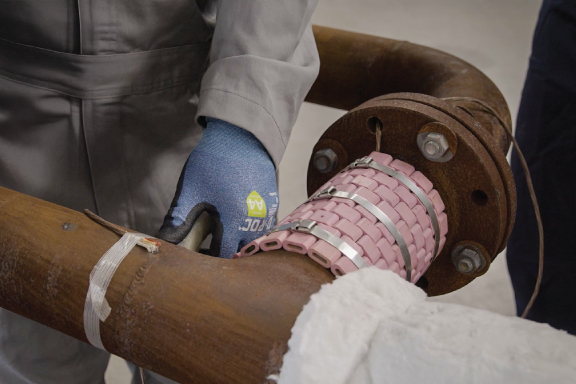
If your next project requires precise, code‑compliant on‑site post weld heat treatment, Superheat offers flexible solutions to match your execution needs. From fully managed Superheat SmartWay™ services with advanced monitoring and control, to Superheat SmartWrap™ self‑perform options, we support safe, efficient, and reliable PWHT execution in the field.
To discuss your application or upcoming project, contact our team through our Contact Us form or call 1‑888‑508‑3226.
Frequently Asked Questions About Post Weld Heat Treatment
Post weld heat treatment (PWHT) is a controlled heating process applied after welding to reduce residual stress, improve material properties, and stabilize the weld and heat‑affected zone. It involves heating the component to a specified temperature below the transformation range, holding for a defined period, and cooling in a controlled manner.
PWHT is important because welding introduces high residual stresses that can lead to cracking, distortion, and premature failure. Stress relief through PWHT allows these stresses to redistribute and relax, improving the long‑term mechanical integrity and reliability of welded components.
If PWHT is omitted or performed incorrectly when required, welded components may experience reduced toughness, increased hardness, higher susceptibility to cracking, corrosion damage, and an increased risk of in‑service or catastrophic failure.
In many applications, yes. Industry codes such as ASME mandate post weld heat treatment based on material composition, thickness, design temperature, pressure, and service conditions. Code requirements must be evaluated during engineering and weld procedure development.
PWHT reduces cracking and corrosion risk by lowering residual stress levels and stabilizing the weld microstructure. It also promotes hydrogen diffusion out of the weld, reducing the likelihood of hydrogen‑induced cracking and stress corrosion cracking in corrosive service environments.
Uniform temperature control ensures even stress relief across the weld and heat‑affected zone. Poor temperature uniformity can introduce new thermal stresses, reduce the effectiveness of stress relief, and result in non‑compliance with applicable codes.
Yes. On‑site post weld heat treatment is commonly performed on large piping systems, pressure vessels, and fixed structures where shop treatment is impractical. With proper controls, instrumentation, and procedures, on‑site PWHT provides the same metallurgical benefits as shop‑based heat treatment.
No. PWHT requirements depend on the material, thickness, welding process, and service conditions. While not every weld requires PWHT, it should always be evaluated for pressure‑retaining, high‑temperature, cyclic, or corrosive service applications.
Industries such as oil and gas, petrochemical and refining, power generation, and marine and offshore frequently require post weld heat treatment due to high operating temperatures, pressures, and demanding service environments.
