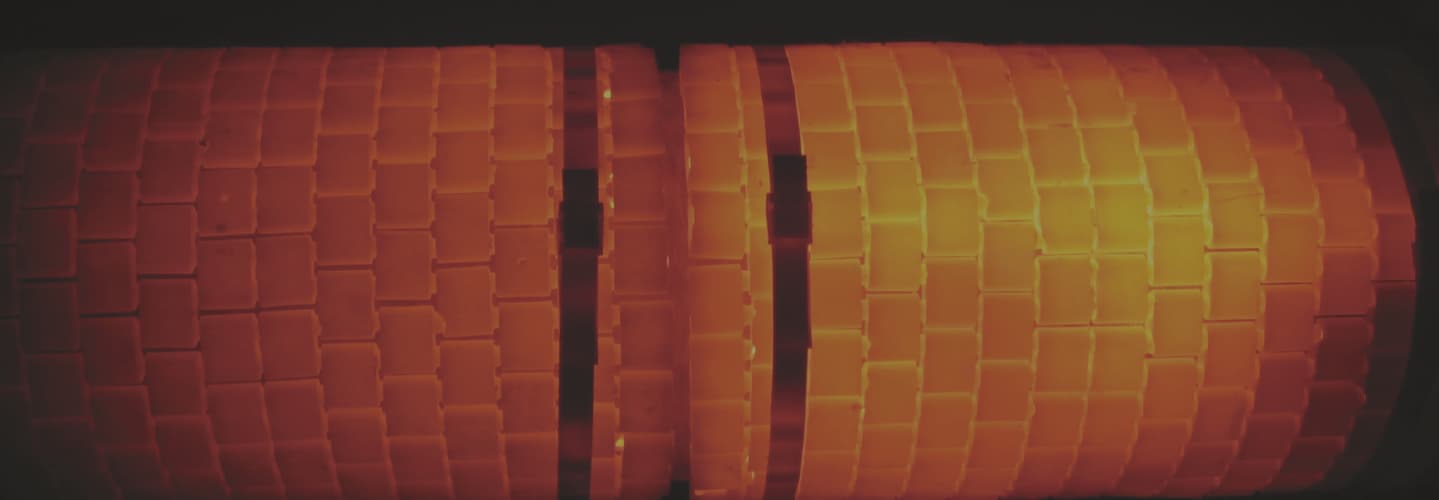
On-Site Heat Treatment Service:
Post Weld Heat Treatment (PWHT)
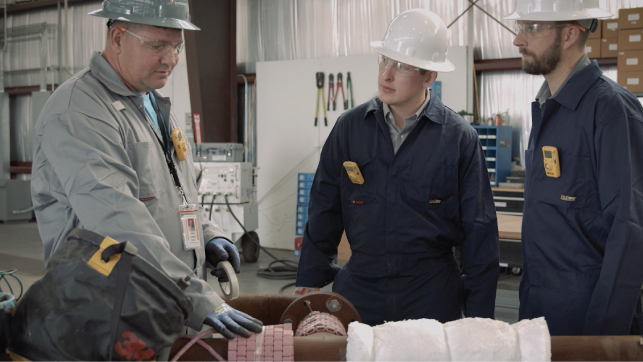 On-site Heat Treatment Services:
Post Weld Heat Treatment (PWHT), also referred to as stress relieving, is an application of uniform heat applied after welding to a structure, or portion thereof, at a sufficient temperature – below the transformation temperature range and with the intention of retaining the material’s strength/quality and ductility.
The primary benefits of post weld heat treatment are recognized as relaxation of residual stress, tempering, and hydrogen removal. If performed incorrectly, or neglected altogether, it can lead to reduced tensile strength, creep strength, notch toughness of the component, as well as the increased susceptibility to corrosion. An important aspect of post weld heat treatment is to prevent brittle trans-granular cracking that can potentially result in catastrophic failures, such as the collapse of a pressure vessel or major piping component.
For that reason, post weld heat treating applications must be executed within strict uniform temperature ranges and follow code specifications which are dependent on the material’s composition, thickness and prior thermal or mechanical process applications.
Utilize post weld heat treatment with our Superheat SmartWay™ service offering on your next project.
Post weld heat treatment is required when specified by design or fabrication codes, material specifications, or service conditions. It is commonly mandated for pressure‑retaining components, thicker materials, and applications involving high temperatures, cyclic loading, or corrosive environments.
PWHT is commonly applied to pressure vessels, piping systems, reactors, headers, and structural components. These components often experience residual stress from welding that must be relieved to ensure safe, long‑term operation.
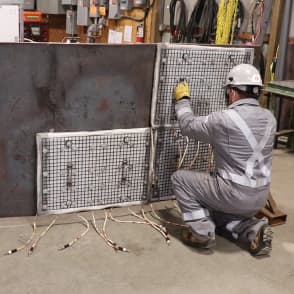
Yes. Post weld heat treatment is frequently performed on‑site for large or fixed equipment where shop heat treatment is impractical. With controlled heating systems and temperature monitoring, on‑site PWHT provides the same metallurgical benefits as shop‑based treatment.
Accurate and uniform temperature control is critical to ensure effective stress relief and code compliance. Improper heating can result in uneven stress reduction, reduced material performance, or introduction of new thermal stresses.
If PWHT is omitted or improperly applied, welded components may experience increased hardness, reduced toughness, higher susceptibility to cracking or corrosion, and an elevated risk of in‑service failure or inspection rejection.
No. PWHT requirements depend on material composition, thickness, welding process, and service conditions. Engineering review and applicable codes determine whether PWHT is necessary for a specific application.
Superheat provides on‑site post weld heat treatment solutions using controlled heating systems, advanced monitoring, and experienced execution to support temperature uniformity, code compliance, and safe field operations.
Other On-site Heat Treatment Services We Provide:
Learn More About Superheat’s Advanced Offerings: